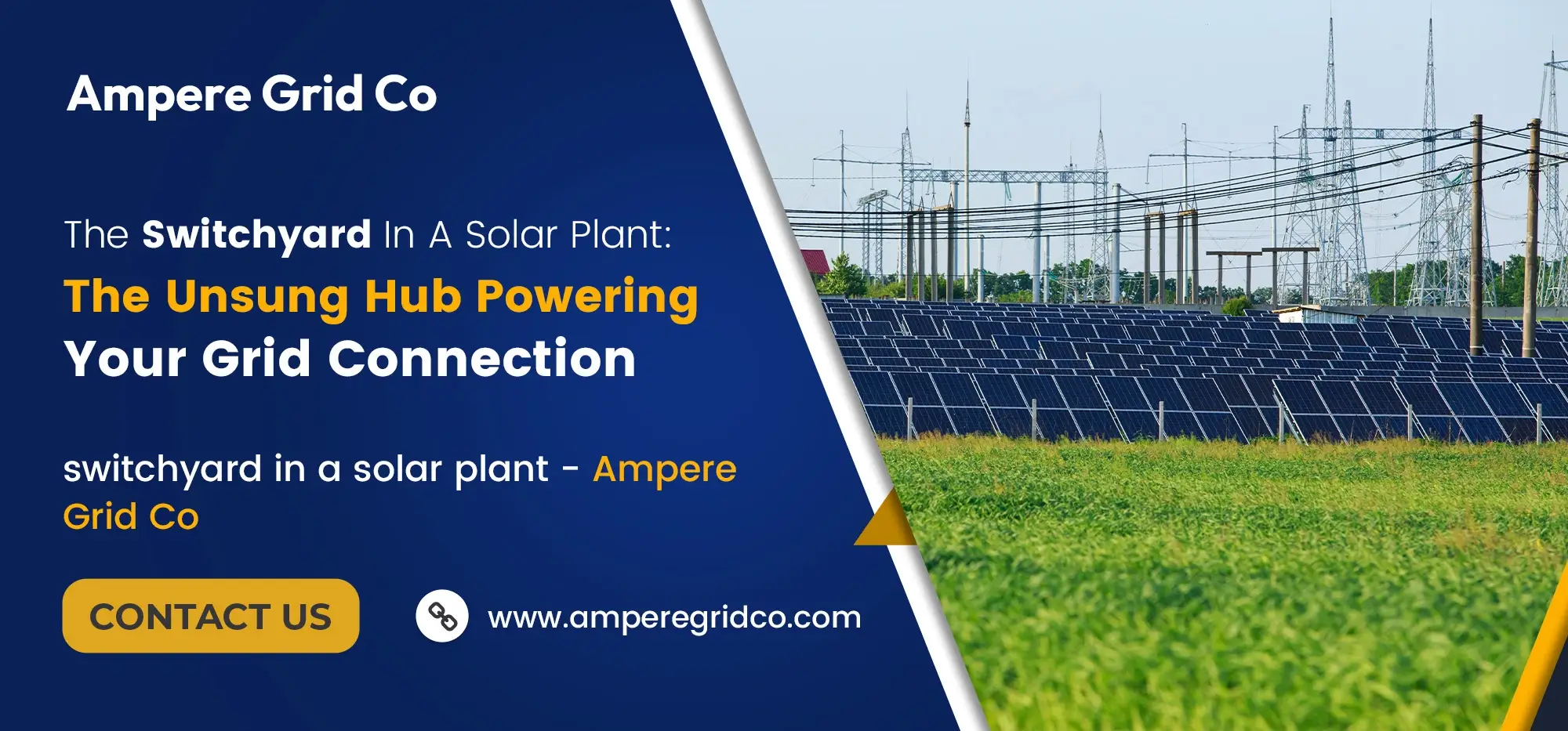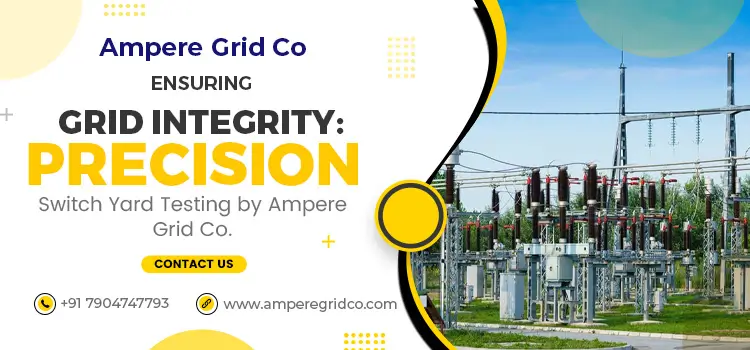
In the high-voltage environment of an industrial switchyard, the difference between a routine day and a catastrophic failure often lies beneath your feet. While massive circuit breakers and towering transformers grab all the attention, the grounding and earthing system—the "Unsung Hero"—works silently to ensure that fault currents find a safe path to the earth.
In 2026, with the increasing complexity of industrial grids and the implementation of the Central Electricity Authority (CEA) 2023 Regulations, the importance of a low-resistance earthing path has never been higher. At Ampere Grid Co, we understand that a grounding system is only as good as its last test. This is why our Switch Yard Testing Service prioritizes the integrity of your earthing resistance to protect both your multi-million dollar assets and your personnel.
Why Choose Ampere Grid Co for the Switch Yard Testing Service?
Testing a switchyard’s earthing isn't just about sticking a probe in the mud; it’s a high-precision engineering task. Here is why Ampere Grid Co is the preferred partner for leading utilities and industrial plants:
1. 220KV & 400KV Expertise
We specialize in EHV (Extra-High Voltage) switchyards where fault currents are massive. Our team has a proven track record of maintaining and testing earthing grids for TANTRANSCO and major private power plants, handling ratings up to 400KV.
2. Advanced Soil Resistivity & Grid Integrity Mapping
Earth resistance varies wildly with soil moisture and temperature. We don't just provide a single "ohm" reading; we perform comprehensive soil resistivity analysis using the Wenner Four-Pin Method. This allows us to map the health of your buried earthing mat and identify "hot zones" where corrosion may have compromised the grid.
3. Compliance with CEA & IS 3043:2018 Standards
Regulatory compliance is getting stricter. Our Switch Yard Testing Service ensures your facility meets the latest IS 3043 (Code of Practice for Earthing) and NEC 2023 standards. We provide certified reports that are essential for safety audits and insurance renewals.
4. Modern Diagnostic Tools
We use high-frequency earth testers and clamp-on meters that allow for testing without disconnecting the neutral—meaning we can often assess your system's health with minimal disruption to your operations.
The Hidden Risk: Corrosion of the Earth Mat
Over decades, the copper or GI (Galvanized Iron) conductors buried in the ground begin to corrode. A switchyard might look perfect from the surface, but a "broken" earth mat underground means that during a lightning strike, the energy has nowhere to go but through your sensitive electronics.
Our Switch Yard Testing Service includes riser integrity tests to ensure every piece of equipment is actually connected to the common grid. We don't just look for a number; we look for a secure, life-saving connection.
Don't Leave Your Safety to Chance
Your switchyard is the gatekeeper of your facility's power. Ensuring that its grounding and earthing resistance are in peak condition is the most cost-effective insurance policy you can buy.
With Ampere Grid Co, you get more than a test—you get the peace of mind that comes from 23 years of high-voltage expertise.
FAQ: Switch Yard Testing Service
1. Why is low earthing resistance critical in a switchyard?
Low resistance (typically below 1 Ohm for large substations) ensures that in the event of a fault, the current flows immediately to the ground. This triggers protective relays and circuit breakers to trip instantly. High resistance can cause "Step and Touch" potentials, which are deadly to anyone standing near the equipment during a fault.
2. How often should I schedule a Switch Yard Testing Service for earthing?
According to the CEA 2023 Regulations, every earthing system must be tested for its resistance to earth at least once a year on a dry day. At Ampere Grid Co, we recommend bi-annual checks for facilities in coastal or high-corrosion areas to ensure grid integrity isn't being eaten away by the soil.
3. What is the difference between Grounding and Earthing?
While often used interchangeably, "Earthing" usually refers to connecting the non-current carrying metal parts (like the transformer tank) to the ground for safety. "Grounding" typically refers to connecting the current-carrying part (like the neutral of a star-connected transformer) to the earth. Both are vital components of our Switch Yard Testing Service.
4. Can soil moisture affect my switchyard’s safety?
Absolutely. During the dry season, soil resistance can skyrocket, making your "safe" earthing system suddenly ineffective. Our testing protocols account for seasonal variations, and we provide recommendations for soil treatment or additional electrodes if your resistance exceeds safe limits during summer months.
5. What happens if my switchyard fails an earth resistance test?
If a test shows high resistance, Ampere Grid Co provides a corrective action plan. This may include cleaning oxidized joints, adding specialized backfill compounds (like bentonite or conductive concrete), or installing additional parallel electrodes to bring the resistance back within safe, compliant limits.