Ask most people what a solar plant is made of and they'll say panels — maybe inverters if they know a bit more. Almost nobody mentions the switchyard, and yet without it, all those panels would be generating power with nowhere to send it. The switchyard in a solar plant is one of the most important parts of the whole project, and one of the least understood.
At Ampere Grid Co, we think of it as the plant's front door to the grid. Here's a clear, jargon-light explanation of what it is, what it does, and why it quietly makes or breaks a project.
What a switchyard actually is
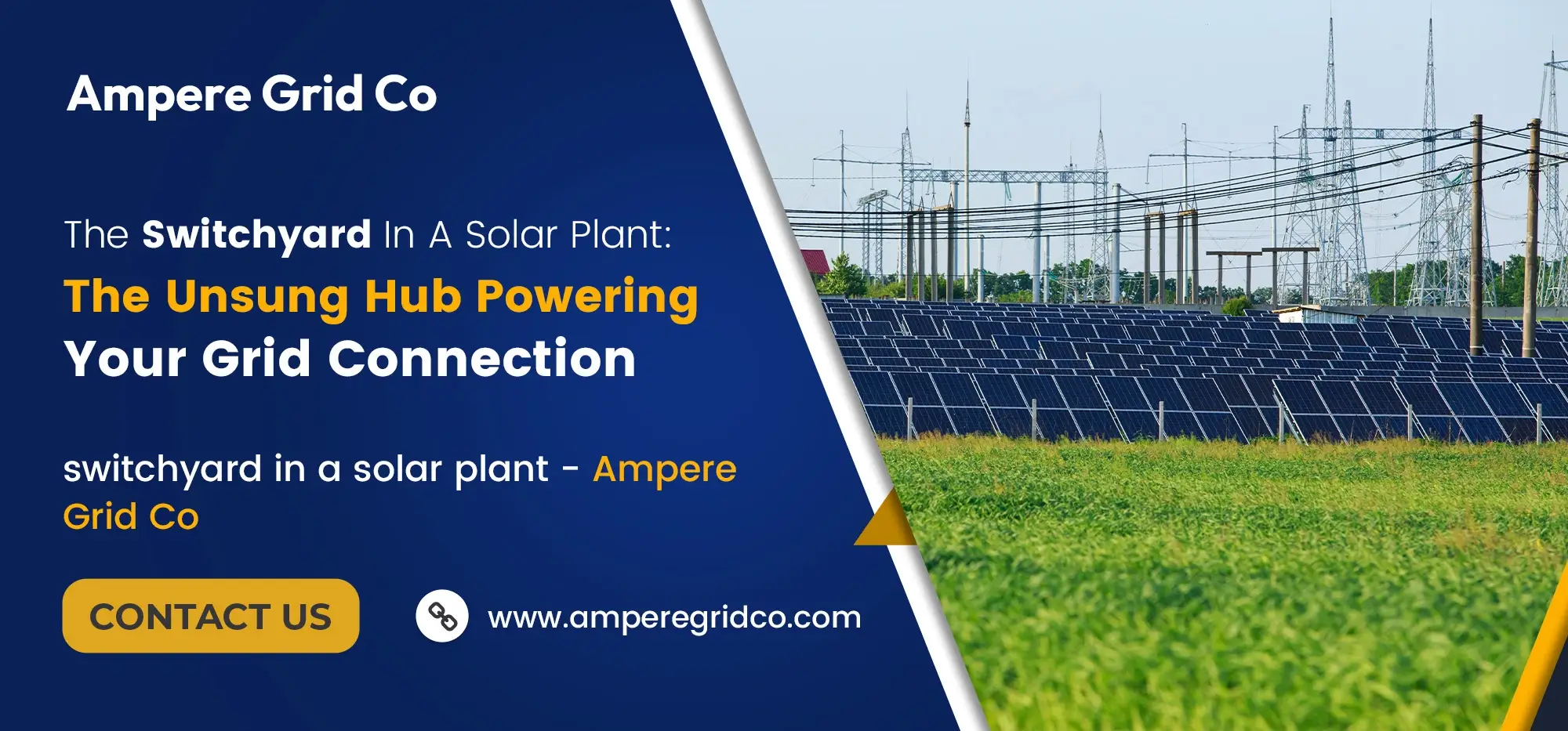
In simple terms, the switchyard is where your solar plant meets the electricity grid. The panels generate power, the inverters convert it into grid-compatible AC, transformers raise it to a high voltage, and then the switchyard is the organised hub that manages, protects, and hands that power over to the grid safely.
Think of a busy plant producing a river of electricity. The switchyard in a solar plant is the controlled gateway where that river is measured, protected, and released into the wider network at the right voltage. Without this gateway, there's simply no safe, legal way to export what the plant produces.
Why step up the voltage at all?
One of the switchyard's core jobs relates to voltage. Electricity loses energy as it travels, and the higher the voltage, the less is lost over distance. So before power leaves the plant, it's stepped up to a high transmission voltage to travel efficiently to where it's needed.
This is why a switchyard in solar plant projects is built around high-voltage equipment. It's the point where the plant's output is raised and matched precisely to the grid's requirements, so the energy travels efficiently and arrives usable. Get this interface wrong and you lose power and fall foul of the grid operator's rules.
The key components, in plain language
A switchyard looks like a fenced area full of steel structures and equipment, but each piece has a clear purpose. Transformers raise the voltage for transmission. Circuit breakers act like heavy-duty switches that can instantly cut the flow if something goes wrong. Isolators allow sections to be safely disconnected for maintenance. Busbars are the conductors that tie everything together.
Alongside these sit protective and measuring devices: instrument transformers that safely measure the huge currents and voltages, lightning arresters that shield the equipment from surges, protection relays that watch for faults and trigger breakers in a heartbeat, and metering that records exactly how much energy is exported. Together, these make the switchyard in a solar plant both the guardian and the accountant of the whole operation.
Protection and safety: the real job
If there's one thing to understand, it's that a switchyard is fundamentally about protection. It constantly watches for faults — a short circuit, a surge, an equipment failure — and is designed to react in a fraction of a second, isolating the problem before it damages expensive equipment or endangers people.
This is why the design and build quality of a switchyard in solar plant projects is so critical. A well-designed switchyard protects the plant's most valuable assets and keeps everyone safe; a poorly designed one is a genuine liability. It's not a place to cut corners, because when something goes wrong on the grid, this is what stands between a minor trip and a major disaster.
Why it can make or break a project
Here's the part that matters commercially. Because the switchyard is the interface with the grid, it's also where the grid operator's technical requirements must be met exactly. If the switchyard doesn't comply, the plant may not be allowed to connect and export power at all — meaning it earns nothing, no matter how many panels are installed.
So while it rarely gets the attention the panels do, the switchyard in a solar plant sits right at the heart of whether the project actually works as an investment. It's the unsung hub that turns generated power into delivered, paid-for energy. At Ampere Grid Co, we give it exactly the engineering attention it deserves, because a plant that can't reliably and compliantly reach the grid isn't really a power plant at all — it's just a field of panels. Getting this gateway right is what lets everything else do its job.
Frequently Asked Questions
1. What is a switchyard in a solar plant?
It's the hub where the solar plant connects to the electricity grid. After panels generate power and inverters and transformers prepare it, the switchyard manages, protects, and safely hands that power over to the grid at the correct high voltage.
2. Why does a solar plant need a switchyard?
Without it, the plant has no safe, compliant way to export its power. The switchyard steps the voltage up for efficient transmission, protects the plant against faults, meters the energy exported, and meets the grid operator's connection requirements.
3. What are the main components of a switchyard?
Key parts include transformers to raise voltage, circuit breakers to cut the flow during faults, isolators for safe maintenance, busbars to connect everything, plus instrument transformers, lightning arresters, protection relays, and metering equipment.
4. Why is the switchyard so important for safety?
It constantly watches for faults like short circuits or surges and reacts in a fraction of a second to isolate problems before they damage equipment or harm people. A well-designed switchyard in a solar plant protects the plant's most valuable assets.
5. How does the switchyard affect whether a project succeeds?
Because it's the grid interface, it must meet the grid operator's technical rules exactly. If it doesn't comply, the plant may not be allowed to connect and export power, meaning it earns nothing — which is why the switchyard is central to a project's success.