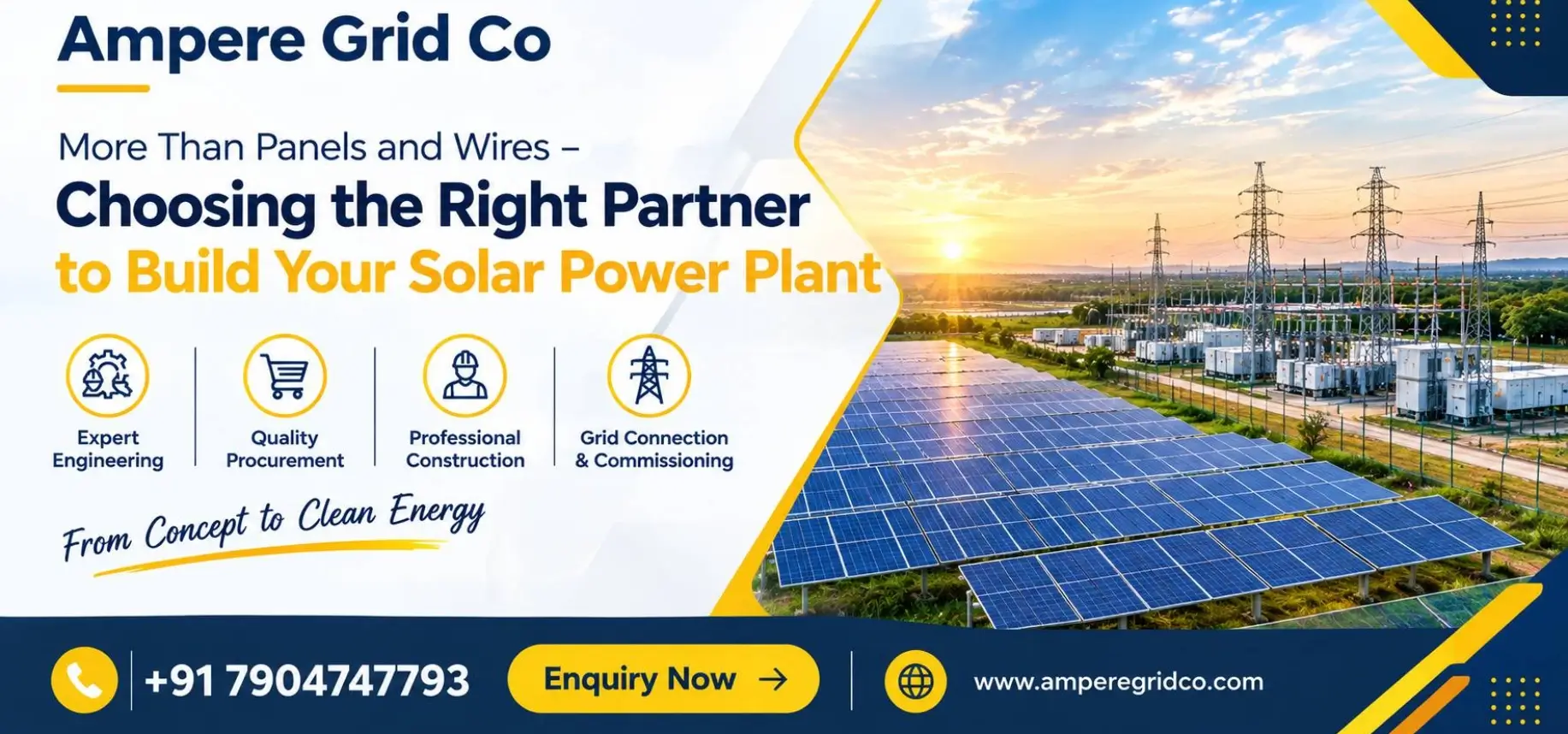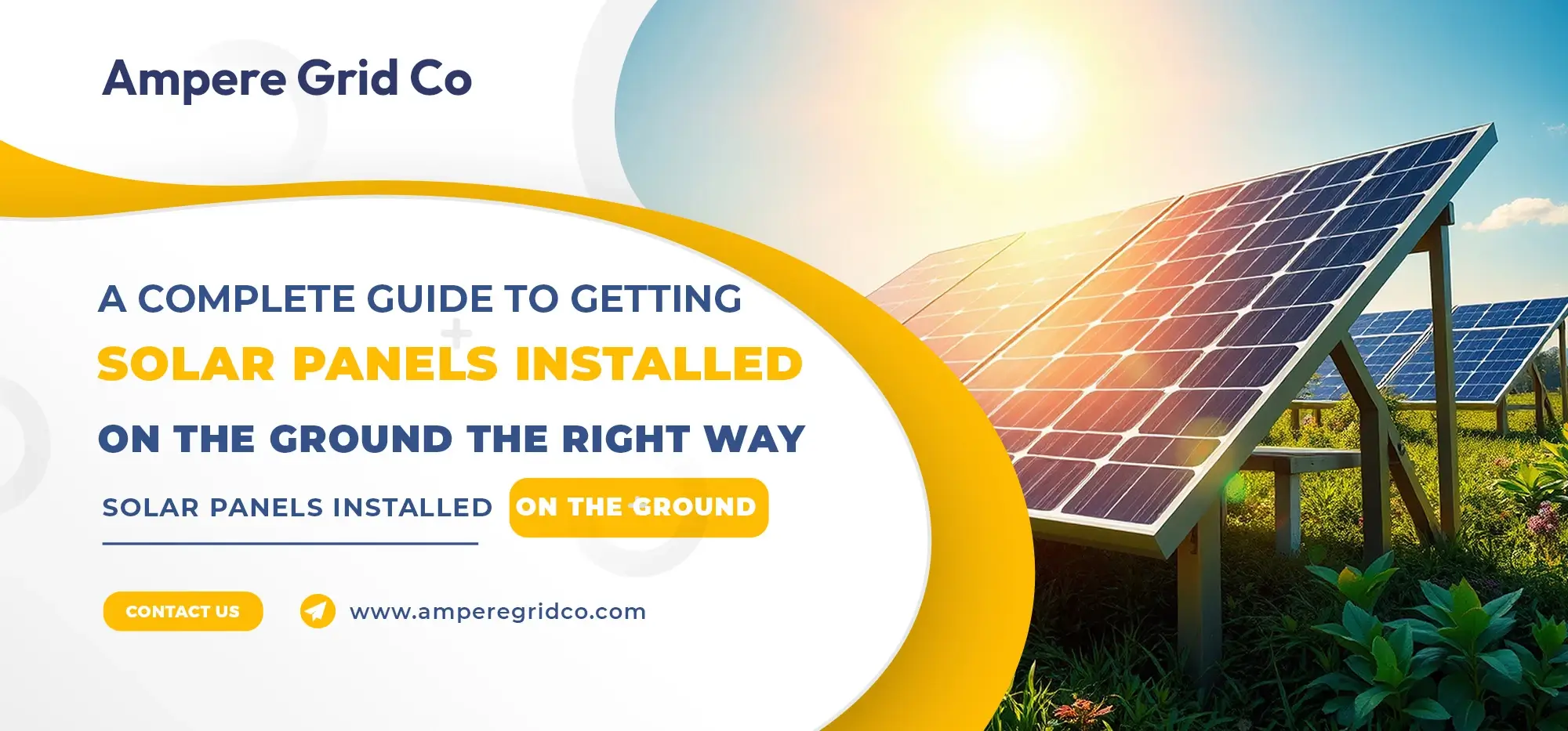
Rooftop solar gets most of the attention because it's what people see on their neighbours' houses. But when the project gets serious — a factory's worth of power, a farm's spare acres, a proper commercial plant — the panels usually come off the roof and onto the earth. Getting solar panels installed on the ground opens up options a rooftop simply can't match, and it's worth understanding why before you decide.
At Ampere Grid Co, we build both, and we're honest with clients about when ground-mount is the smarter path and what it demands. It's not automatically better — it's better for particular situations, and knowing the difference saves money.
Why go to the ground at all?
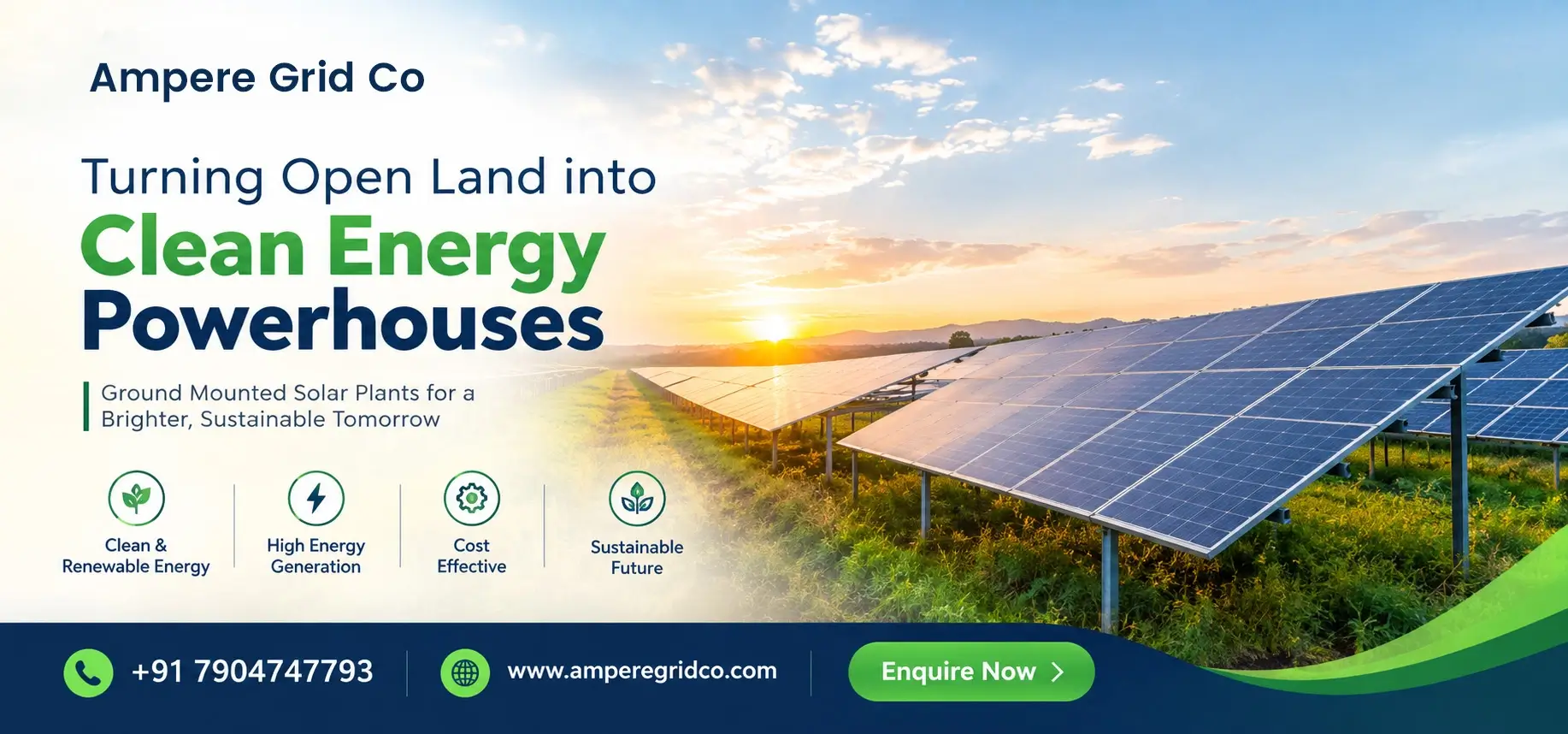
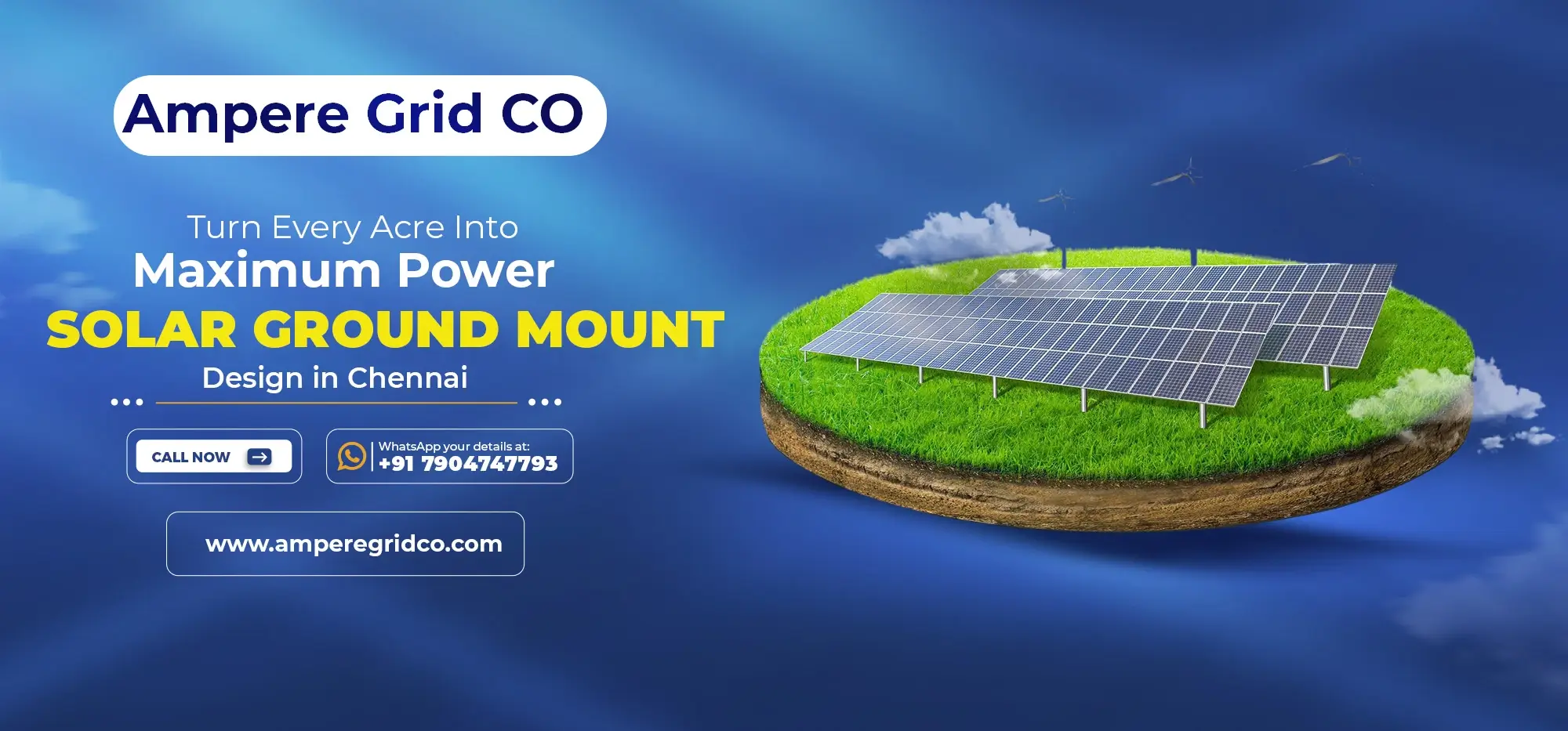
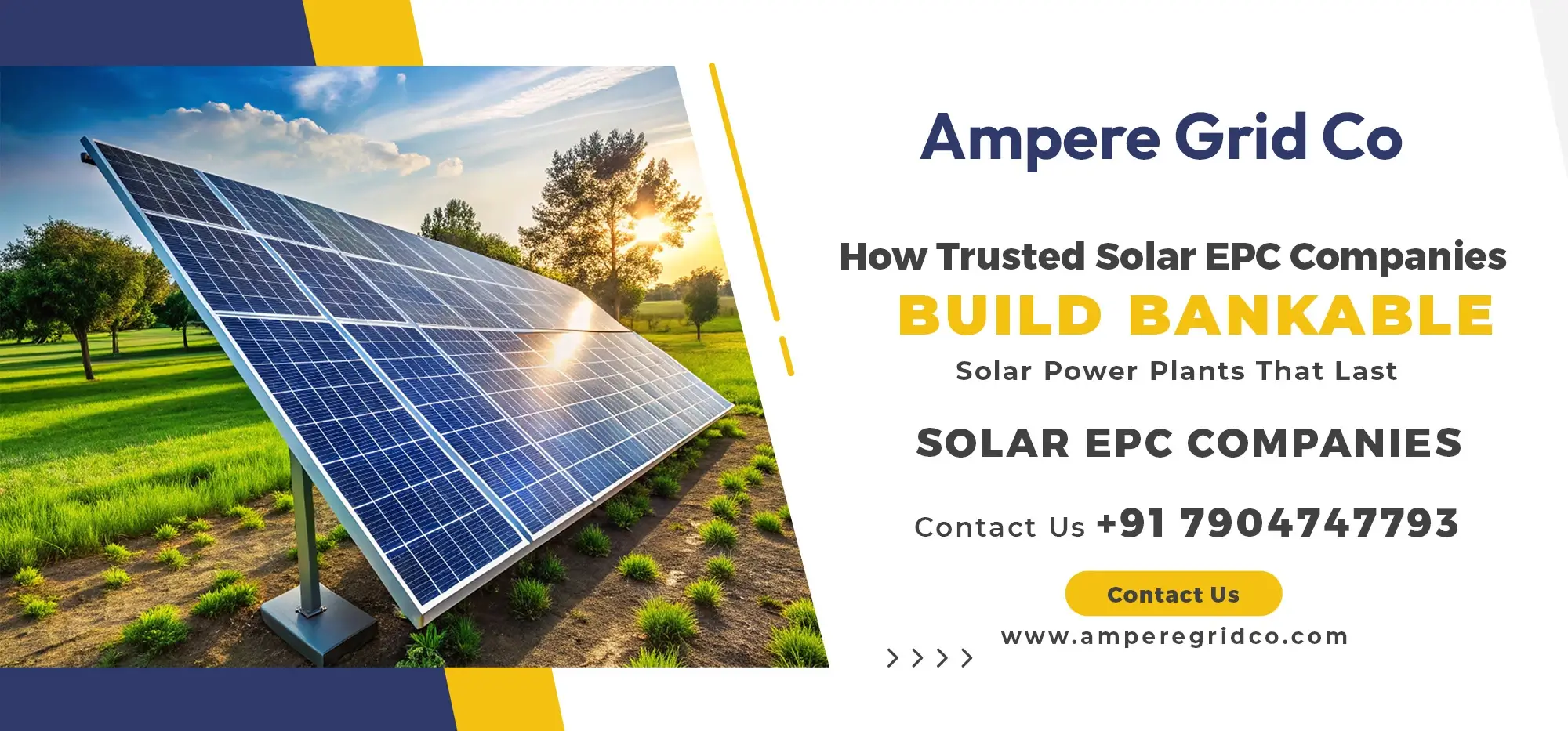
The simplest answer is freedom. A roof limits you to its size, its shape, its strength, and whichever way it happens to face. The ground has none of those constraints. When you have solar panels installed on the ground, you point them at the ideal angle, orient them for maximum sun, and space the rows exactly as the design wants — not as the building allows.
That freedom translates directly into output. Panels tilted to the perfect angle and free of chimney or parapet shadows simply generate more. For a large system where every extra unit of energy matters, that edge adds up fast over the years.
Access makes maintenance easy
There's a practical, underrated benefit too: you can walk right up to everything. Cleaning, inspection, repairs, and monitoring are all far simpler at ground level than on a roof three storeys up. No harnesses, no fragile roof membrane to worry about damaging, no awkward access hatches.
Over a 25-year life, that ease of access quietly lowers maintenance costs and means problems get spotted and fixed sooner. Solar panels installed on the ground are, frankly, just friendlier to look after — and a plant that's easy to maintain tends to be a plant that's actually maintained.
The catch: it needs land, and the land needs work
Ground-mount isn't free of trade-offs. The obvious one is that it uses land — land you either own or lease, land that could otherwise grow crops or hold a building. If space is tight or expensive, that changes the maths.
The less obvious cost is preparation. Before solar panels installed on the ground can perform, the site has to be readied: cleared, sometimes levelled, and studied. Soil testing decides the foundations — sandy, rocky, or soft ground each calls for a different mounting approach. Skip that step and you risk structures that shift or corrode. It's ground work you don't have with a roof that's already standing.
Foundations and mounting: the part under the panels
Speaking of foundations, this is where ground-mount projects are quietly won or lost. Depending on the soil, panels might sit on driven steel piles, screwed ground anchors, or concrete footings. Each suits different conditions, and picking wrong means either overspending or under-building.
The mounting structure above also has to handle local wind and resist corrosion for decades. Coastal or humid sites need better-protected steel. This is engineering, not guesswork, and it's the main reason ground-mount deserves a proper design rather than a generic kit.
Is ground-mount right for you?
As a rough guide: if you have open, usable land and a system too large for your roof, or a roof that's weak, shaded, or awkwardly oriented, then having solar panels installed on the ground usually wins. If land is scarce or costly and your roof is sound and sunny, rooftop may be the sensible choice.
The honest answer almost always comes down to your specific site — how much land, what soil, which direction, how big a system. A good installer will look at all of that before recommending one over the other, rather than pushing whichever they'd prefer to build. Ground-mount is a powerful option when it fits, and knowing the trade-offs up front is how you get a plant that stands solid and pays off for the long haul.
Frequently Asked Questions
1. Are solar panels installed on the ground better than rooftop?
Not universally — they're better for particular cases. Ground-mount wins when you have open land and want maximum output or an easy-to-maintain large system. Rooftop makes more sense when land is scarce and you have a sound, sunny roof going unused.
2. How much land do I need?
It depends on system size, panel efficiency, and row spacing needed to avoid self-shading. As a rough planning figure, expect to need noticeably more area than the panel surface alone, since gaps between rows are essential.
3. Why is soil testing necessary?
The soil decides what foundations will safely hold the structures. Sandy, rocky, and soft ground each need a different mounting approach, and getting it wrong risks structures that shift or corrode over time.
4. Do ground-mounted panels produce more energy?
Often, yes. Because they can be tilted to the ideal angle and oriented for maximum sun without a roof's constraints, and kept free of shading, solar panels installed on the ground frequently generate more per panel than a compromised rooftop layout.
5. Are they harder to maintain?
Quite the opposite — they're easier. Everything sits at ground level, so cleaning, inspection, and repairs are simpler and safer than working at height on a roof, which tends to keep the plant better maintained over its life.