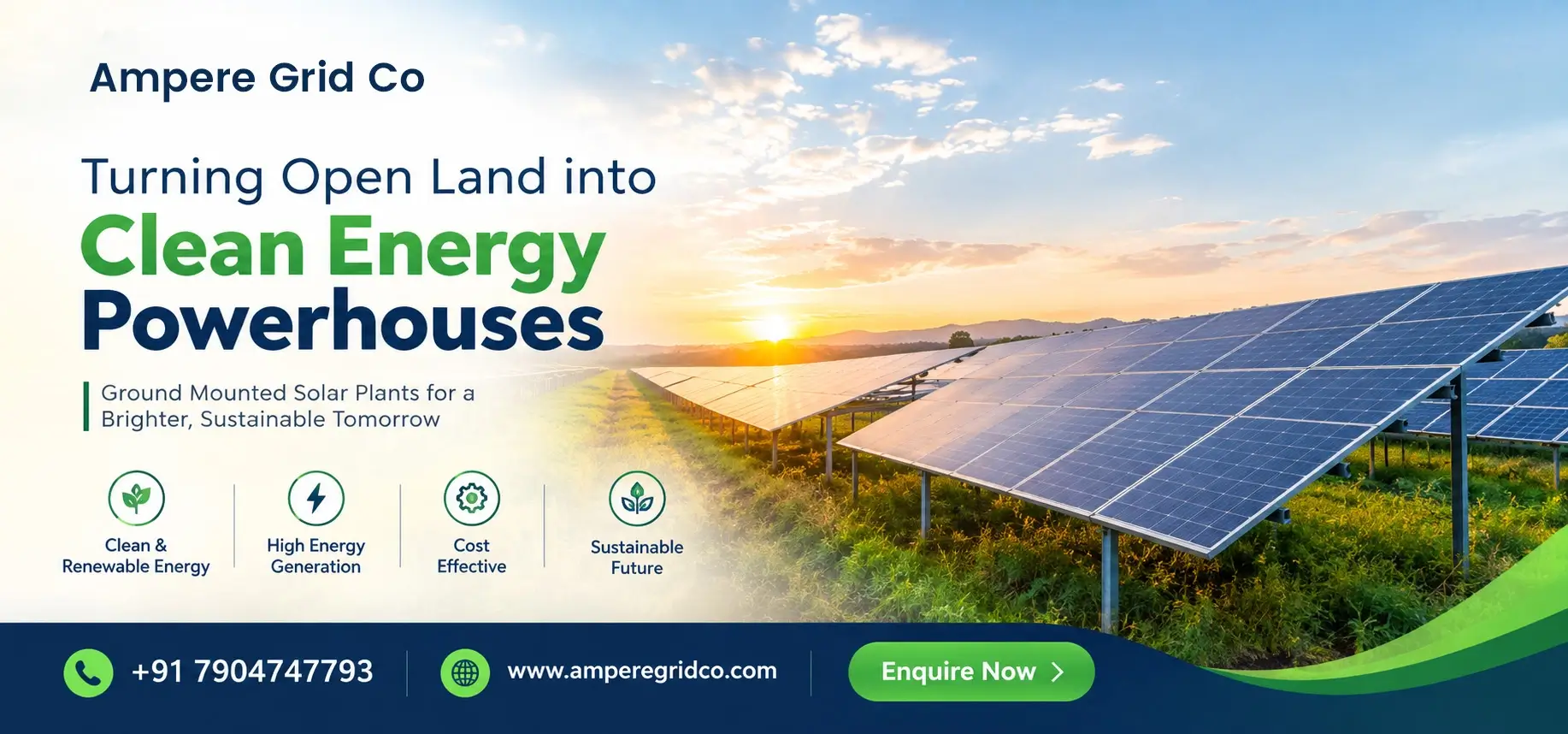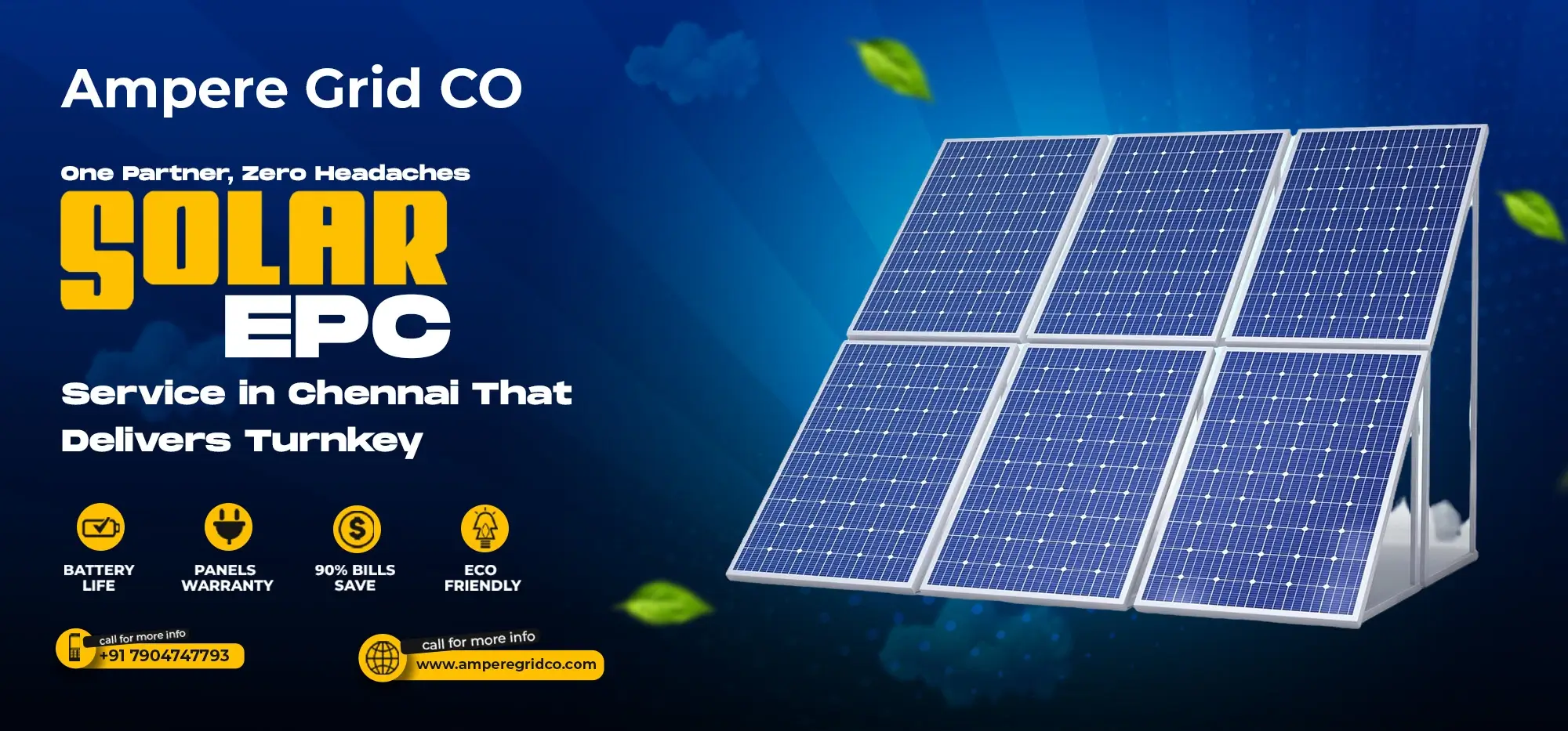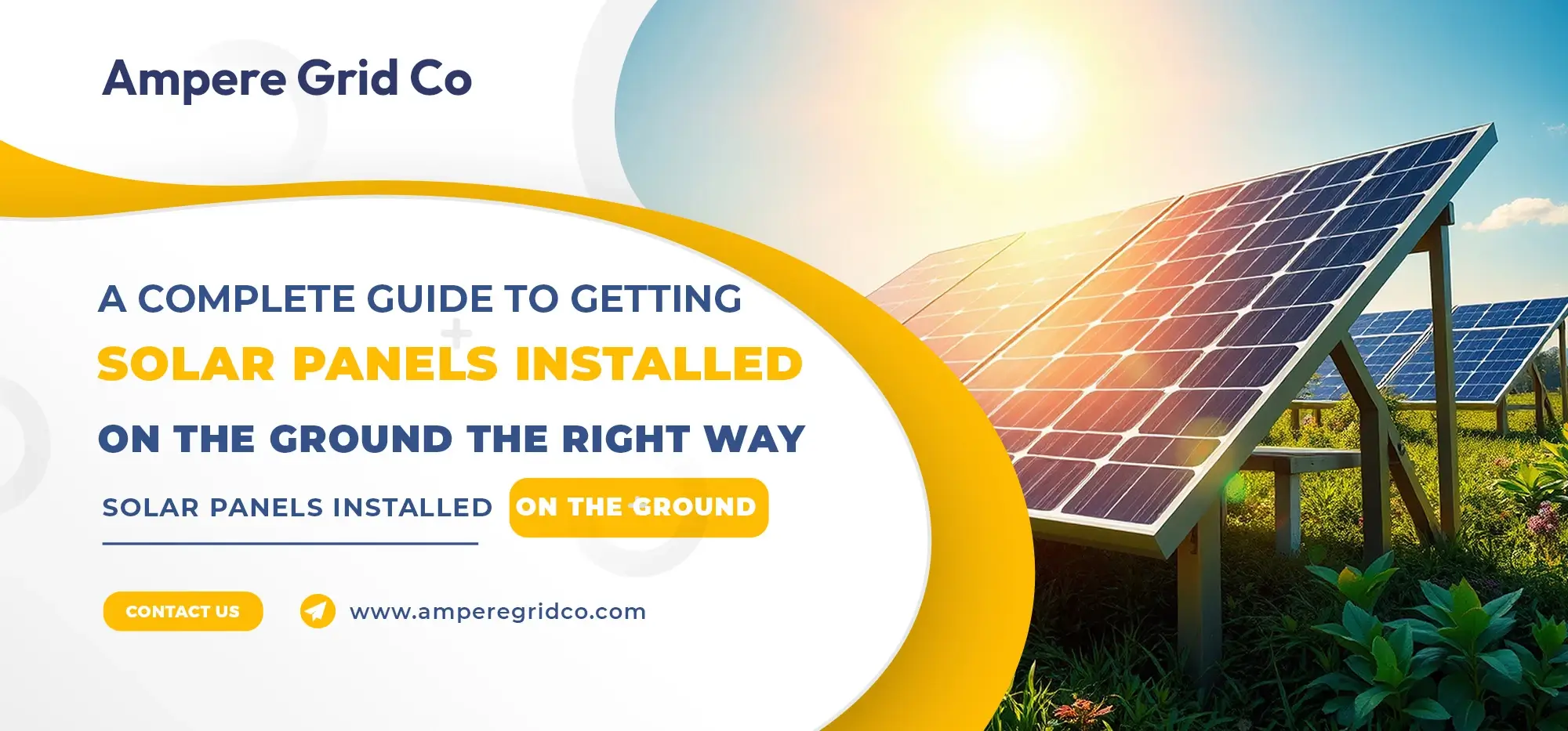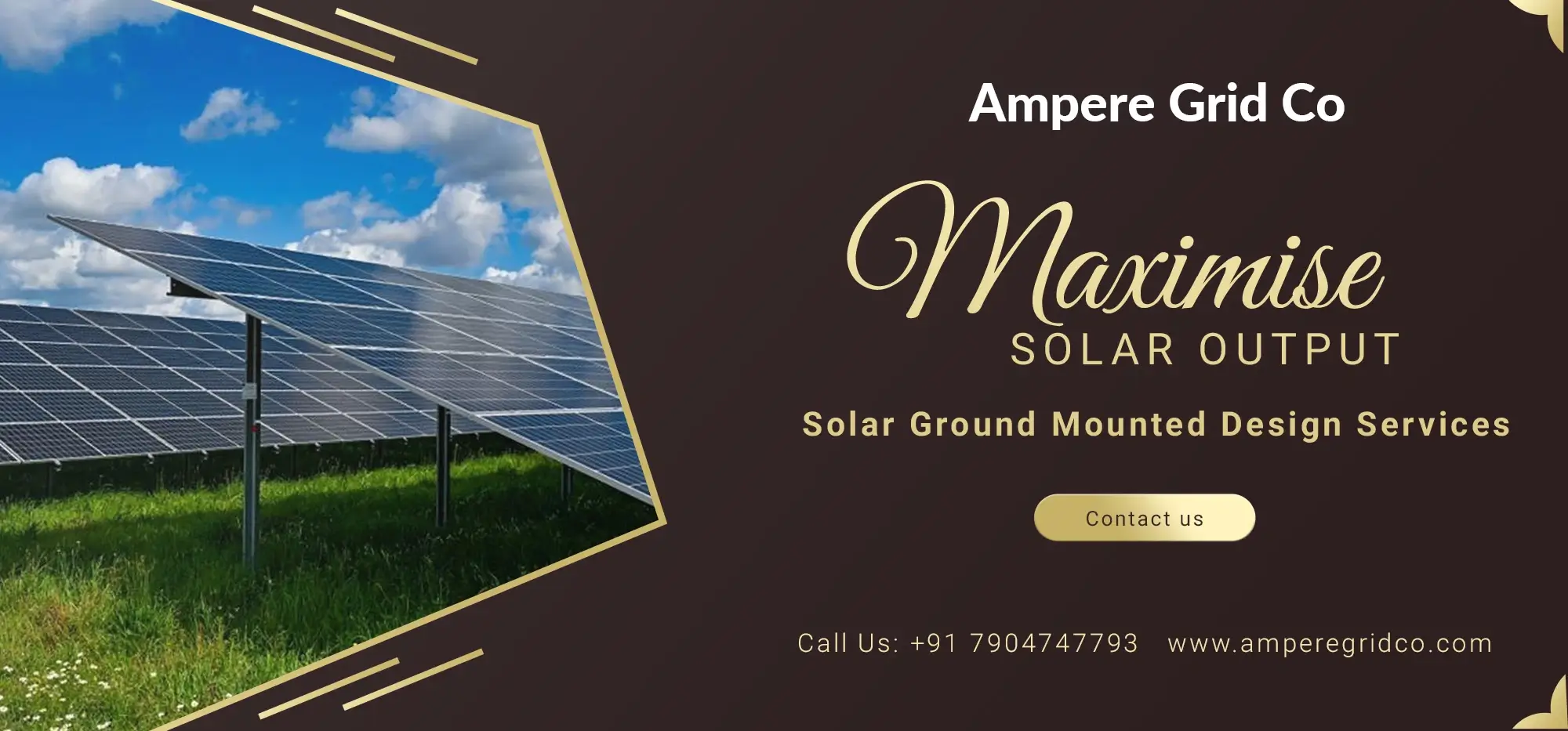
When a ground-mounted solar plant is finished, it looks almost effortless — neat rows of panels tilted at the sun, quietly making power. That tidy simplicity is a bit of an illusion. By the time you see the panels, the hardest and most important work is already done, buried in the ground and hidden in the details. Getting solar panels installed on the ground properly is far less about the panels themselves and far more about everything underneath and around them.
At Ampere Grid Co, we think clients make better decisions when they understand this hidden work, so here's an honest look behind the panels at what really goes into a plant that lasts.
It starts with reading the land
Long before anything is built, the site has to be understood. The ground where solar panels installed on the ground will sit is surveyed and studied — its shape, its slope, and crucially what lies beneath the surface. A topographic survey maps the terrain, and a shadow study checks how sunlight moves across the site through the year so nothing steals output later.
This stage sounds unglamorous, but skipping it is where projects quietly go wrong. Land that looks flat and simple can hide slopes, soft patches, or drainage problems that only reveal themselves once you start digging. Reading the land first is what prevents expensive surprises halfway through.
The soil decides the foundations
Here's something most people never consider: the type of soil largely dictates how the whole plant is anchored. That's why soil testing is one of the most important early steps. Sandy, rocky, clay, or soft ground each behave differently and each demand a different foundation approach.
Depending on what the testing reveals, the structures holding solar panels installed on the ground might rest on driven steel piles, screwed ground anchors, or concrete footings. Choose wrong and you either overspend on foundations you didn't need or, far worse, build structures that shift, sink, or corrode over the years. The panels above are only as reliable as what's holding them to the earth.
The structures that carry it all
On top of those foundations sits the mounting structure — the steel framework that actually holds the panels at the right angle. This is quietly critical engineering. The structure has to bear the weight of the panels, resist decades of wind loading without flexing or failing, and survive the local climate without rusting away.
Coastal, humid, or industrial sites need better-protected, corrosion-resistant steel, because a structure that degrades takes the whole array down with it. Getting solar panels installed on the ground to last 25 years means the framework beneath them has to be designed for those 25 years too, not just for installation day.
The cabling and earthing you never see
Once the structures and panels are up, there's a whole network that stays largely out of sight: the cabling that carries power from the panels to the inverters and onward, often run through trenches across the site. Cables have to be correctly sized so they don't overheat or waste energy, and routed and protected so they survive the elements and stay safe.
Just as vital is earthing and lightning protection. A large metal array standing in an open field is exposed to lightning and electrical faults, and proper earthing is what keeps the plant — and the people who maintain it — safe. None of this is visible in a photo of the finished plant, but it's central to whether solar panels installed on the ground operate safely for decades.
Why the hidden work is the whole point
Notice a pattern here: almost everything that determines a plant's success happens before or beneath the panels. The survey, the soil testing, the foundations, the structural steel, the cabling, the earthing — this is the real project. The panels are almost the easy part at the end.
That's exactly why choosing who does the work matters so much. Anyone can bolt panels to a frame; doing the hidden groundwork properly is what separates a plant that quietly performs for 25 years from one that develops problems no one can easily reach. When Ampere Grid Co gets solar panels installed on the ground, the care goes into the parts you'll never see — because that's what you're really paying for, and that's what keeps the power flowing long after installation day is a distant memory.
Frequently Asked Questions
1. What actually goes into getting solar panels installed on the ground?
Far more than fixing panels to frames. It involves surveying the site, soil testing, designing and building foundations, erecting corrosion-resistant mounting structures, running and protecting cabling, and installing earthing and lightning protection. Most of this critical work is hidden beneath or behind the panels.
2. Why is soil testing so important for ground-mounted solar?
The soil type largely decides the foundation approach. Sandy, rocky, clay, and soft ground each need different anchoring — driven piles, screwed anchors, or concrete footings. Getting it wrong risks structures that shift, sink, or corrode, so testing prevents costly mistakes.
3. How long should a ground-mounted solar plant last?
A well-engineered plant typically performs reliably for around 25 years. Reaching that lifespan depends heavily on the hidden work — sound foundations, corrosion-resistant structures, and proper cabling and earthing — not just the quality of the panels themselves.
4. Why do the mounting structures matter so much?
They carry the panels' weight, resist decades of wind loading, and must survive the local climate without rusting. Coastal or humid sites need extra corrosion protection. If the structure degrades, the whole array is affected, so it must be designed for the plant's full life.
5. What hidden parts of the plant are easiest to overlook?
The cabling, trenching, and earthing. Cables must be correctly sized and protected, and a large metal array in an open field needs proper earthing and lightning protection for safety. None of this shows in a finished photo, but it's essential to safe, long-term operation.