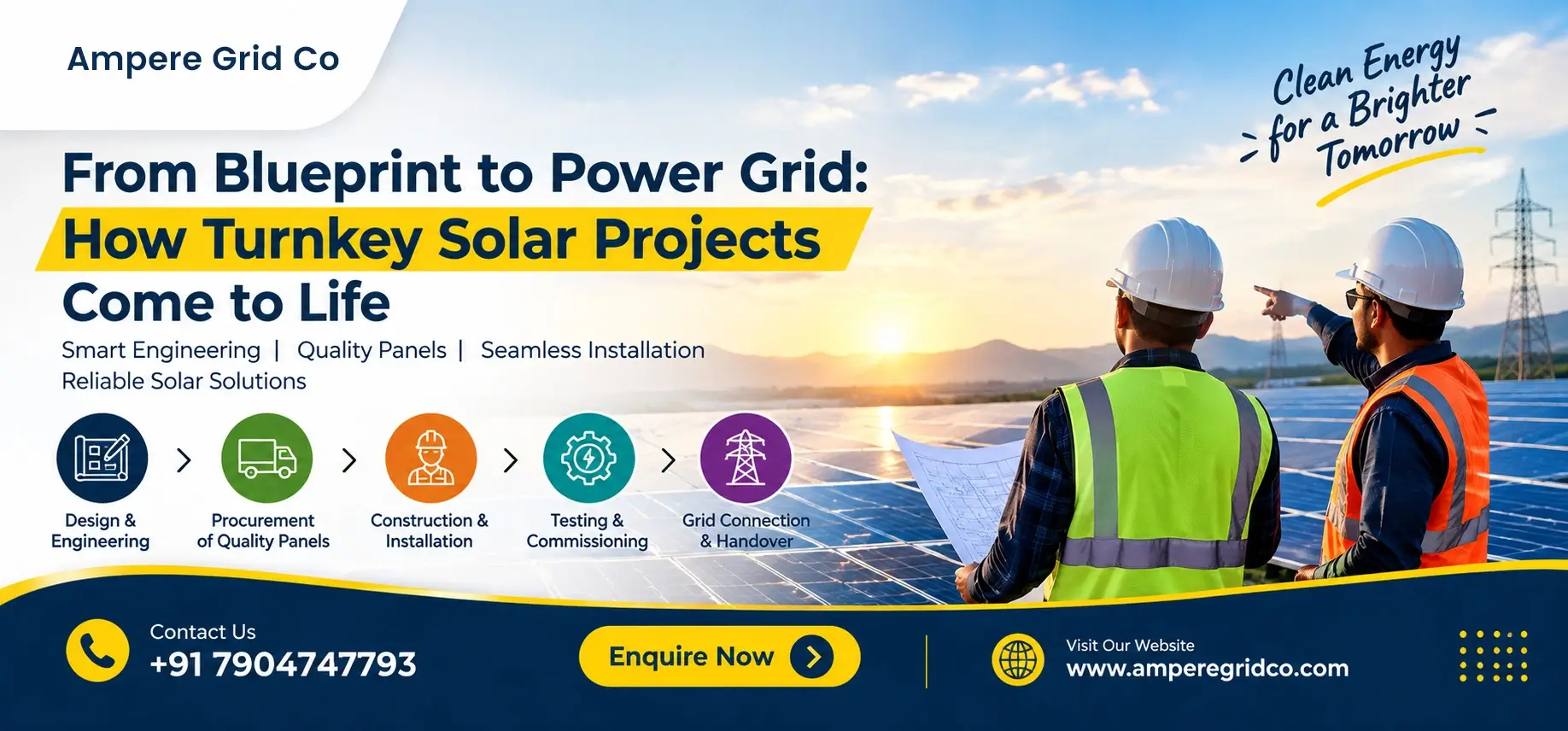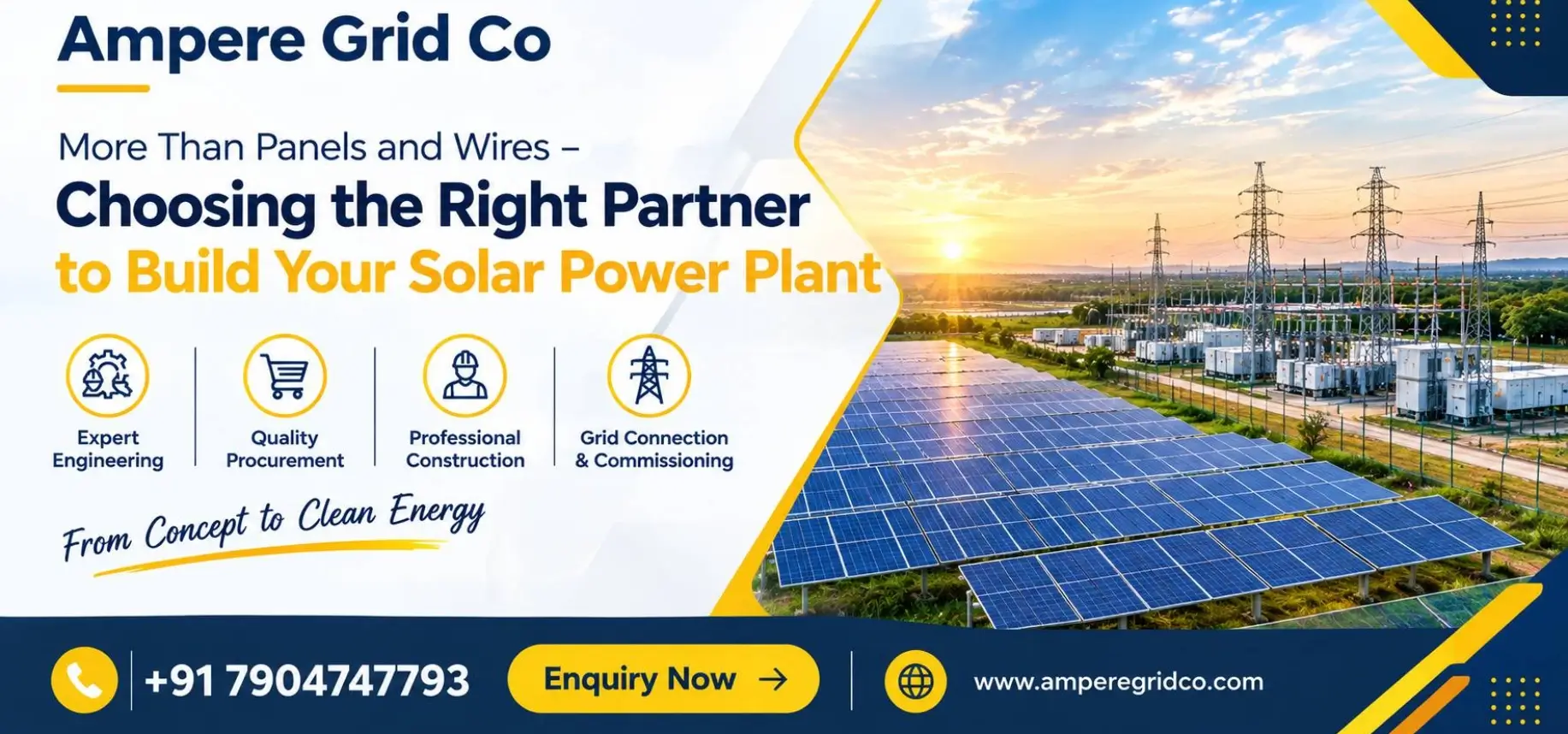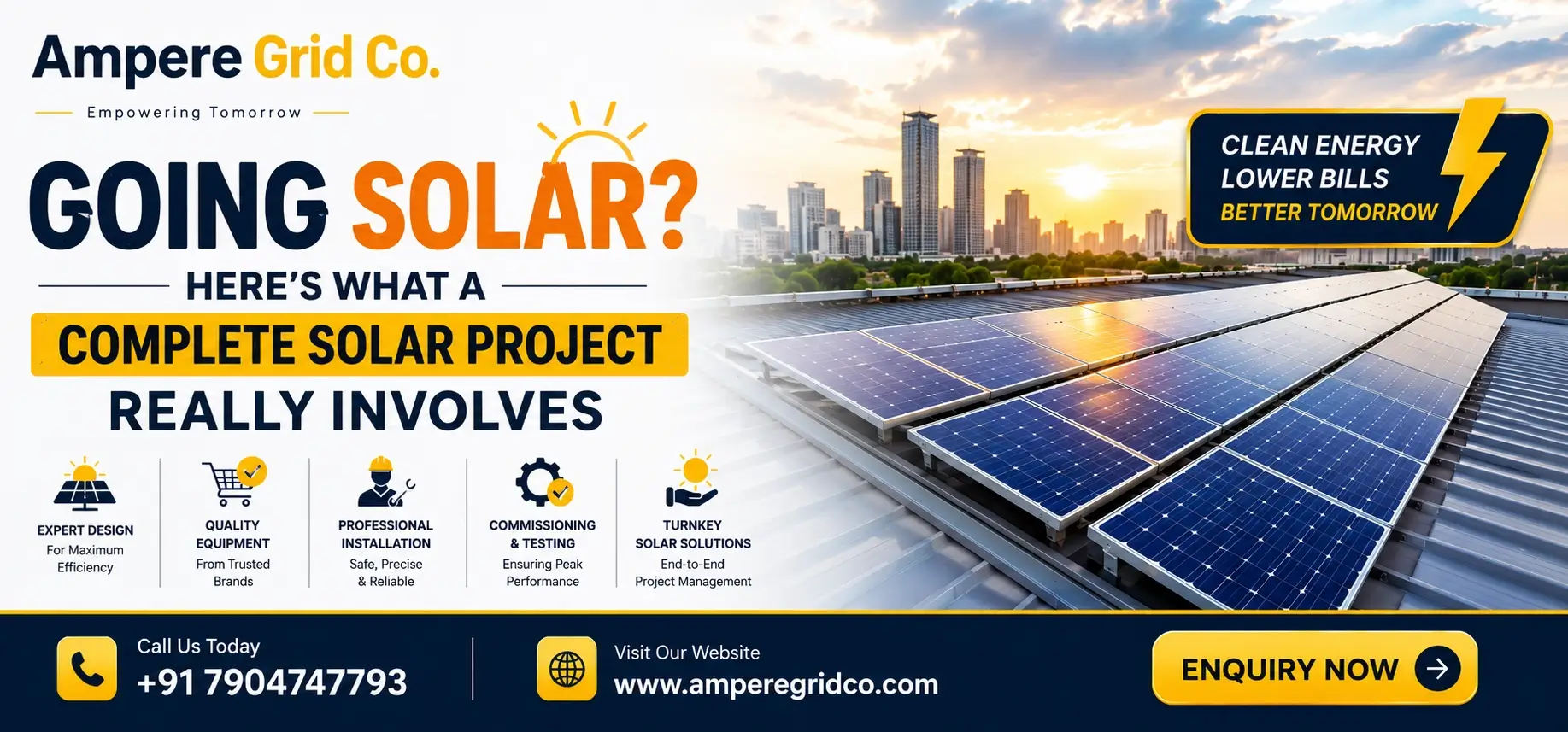
There's a common misunderstanding about building a solar plant: that the hard part is putting up the panels. Panels are the easy, visible finish. The real work is everything that happens before and around them — the surveys, the paperwork, the design maths, the grid negotiations. A good epc contractor for solar power plant projects carries all of that, and the smoothest projects are the ones where the client barely sees the machinery grinding away underneath.
At Ampere Grid Co, we like to walk clients through what actually happens between an empty plot and a plant feeding power to the grid. It demystifies the process and shows where the value really sits.
Day one: the site tells you what's possible
Everything starts with the land, and land lies if you don't check it. Before a single line is drawn, the site gets studied properly — a topographic survey, soil testing to see what foundations it will hold, a shadow analysis to catch anything that will steal sunlight through the year, and an honest look at how far the grid connection point sits.
This early stage decides a lot. A capable epc contractor for solar power plant work will sometimes come back and say a site needs more earthworks than expected, or that the layout has to shift to avoid a shading problem. It's not what a client wants to hear, but it's far cheaper to learn it now than after the structures are in the ground.
The paperwork nobody enjoys but everyone needs
Here's the unsexy truth: a huge chunk of a solar project is permits and approvals. Land-use clearances, electrical approvals, environmental sign-offs, and the all-important agreement with the utility to connect and export power.
This is where an experienced epc contractor for solar power plant delivery quietly saves months. They've navigated these offices before, they know which documents trip people up, and they can run approvals in parallel rather than one after another. A newcomer often discovers, too late, that a missing clearance has frozen the whole project while the calendar keeps ticking.
Design: turning sunlight into a spec sheet
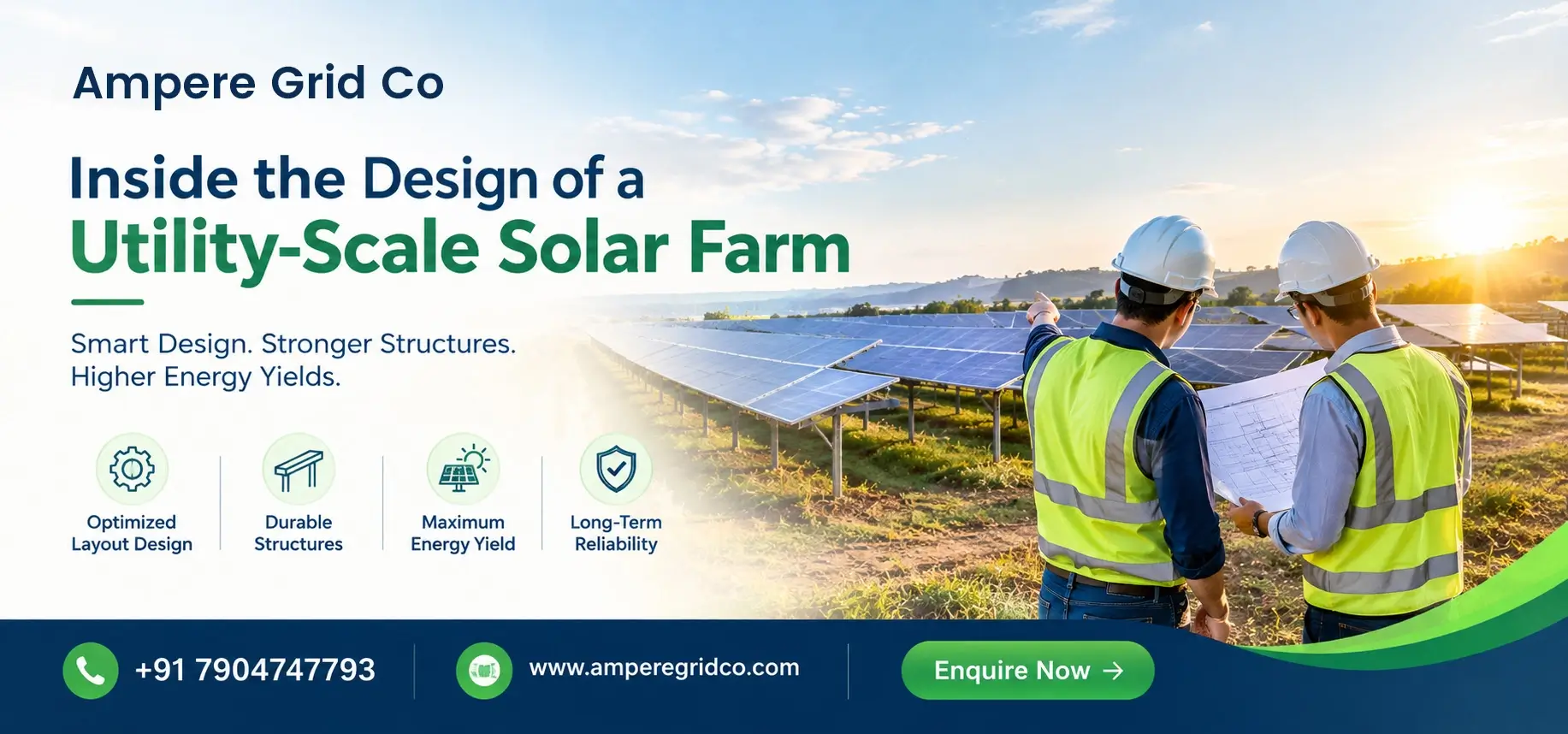
With the site understood and approvals moving, the engineering firms up. This is where the plant is truly designed — how the panels are arranged into strings, which inverters convert the power and where they sit, how cables are sized so they don't overheat or waste energy, and how the whole thing is earthed and protected against faults and lightning.
Good design here is invisible when it works and painfully obvious when it doesn't. Undersized cables bleed away output as heat. A poor string layout loses power to partial shading. The right epc contractor for solar power plant gets these details correct on paper first, because fixing them in a live field is slow and expensive.
Construction: where the plan meets the ground
Now the visible part begins. Foundations go in — screwed, driven, or concrete depending on what the soil testing revealed. Mounting structures rise, panels are fixed and wired, inverters and transformers are set, and cabling is run and terminated.
Discipline matters more than speed here. Torque settings on bolts, correct cable routing, clean terminations, proper labelling — the small habits are what keep the plant safe and serviceable for decades. A rushed crew leaves problems that surface years later as loose connections and hot spots.
Commissioning and grid connection: the moment of truth
Before the plant is handed over, it's tested hard. Insulation resistance, string voltages, inverter behaviour, earthing continuity, protection systems — everything is checked against the design. Only then is the plant synchronised with the grid and allowed to export power.
This is the payoff moment, and a thorough epc contractor for solar power plant treats it as a proper checklist, not a formality. Skipped commissioning is where hidden faults hide, waiting to trip the plant or, worse, become a safety issue down the line.
From bare land to grid power, the journey has far more steps than the panels suggest. Done well, it feels almost boring to the client — surveys happen, approvals arrive, structures rise, and one day the meter starts spinning backwards. That quiet, uneventful path from plot to power is exactly what a good contractor is there to deliver.
Frequently Asked Questions
1. What does an EPC contractor for a solar power plant actually do?
They manage the entire build end to end — site survey and design, permits and grid approvals, procurement, construction, and final commissioning. You deal with one team from empty land to a working, grid-connected plant.
2. How long does it take to build a solar power plant?
It varies with size and site, but much of the timeline is approvals and grid connection rather than construction itself. An experienced contractor shortens this by running permits in parallel and anticipating requirements early.
3. Why is the grid connection such a big deal?
Exporting power requires agreement and technical clearance from the utility, and their timelines are outside your control. A good epc contractor for solar power plant plans for this early so it doesn't become the bottleneck that delays the whole project.
4. What happens during commissioning?
The plant is tested thoroughly — insulation, string voltages, inverter operation, earthing, and protection systems — against the original design before it's connected to the grid. It's the stage that catches hidden faults before they cause problems.
5. Can I hire different companies for design, supply, and construction?
You can, but coordinating them and owning the gaps between them becomes your problem. A single EPC contractor carries that responsibility, which usually means fewer delays and clearer accountability.