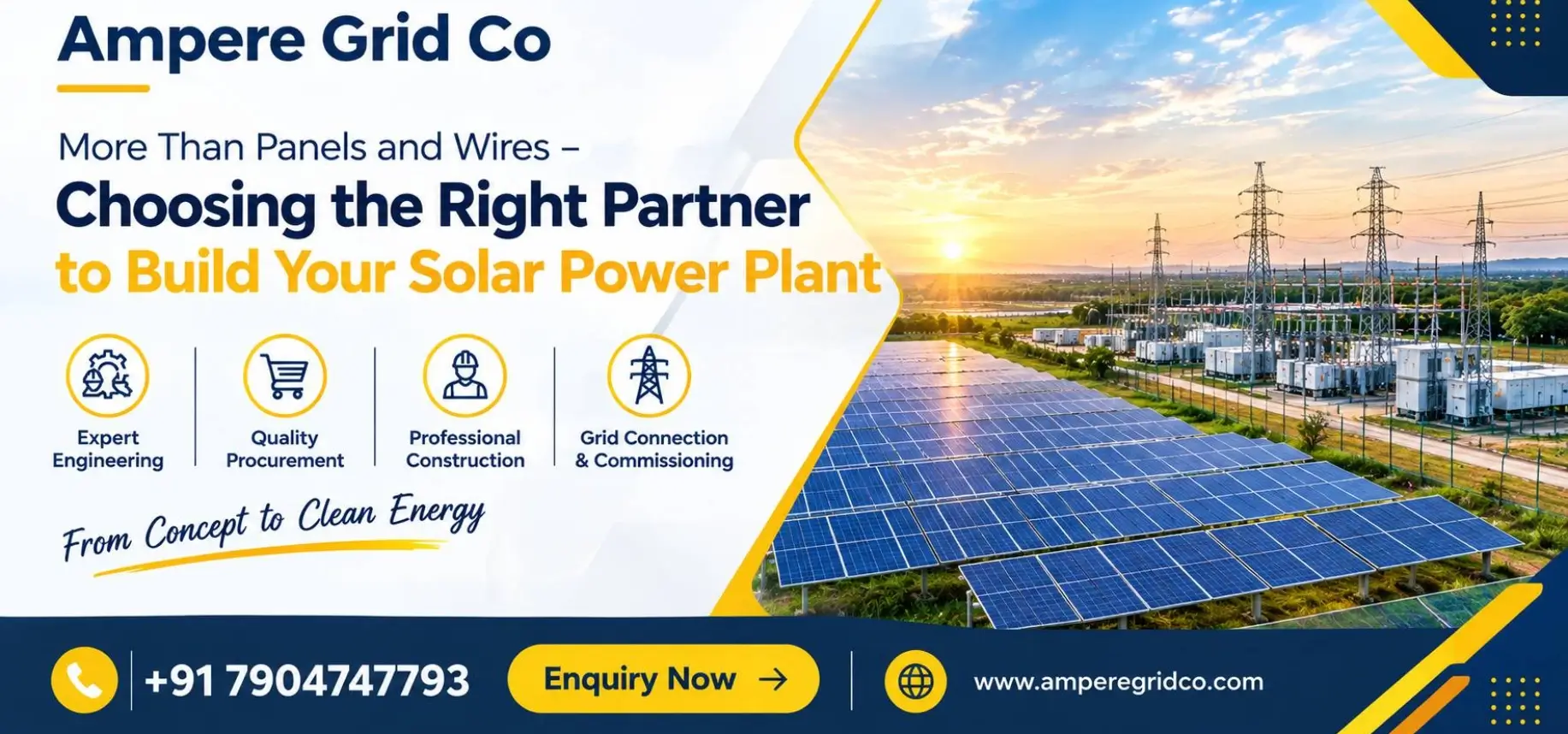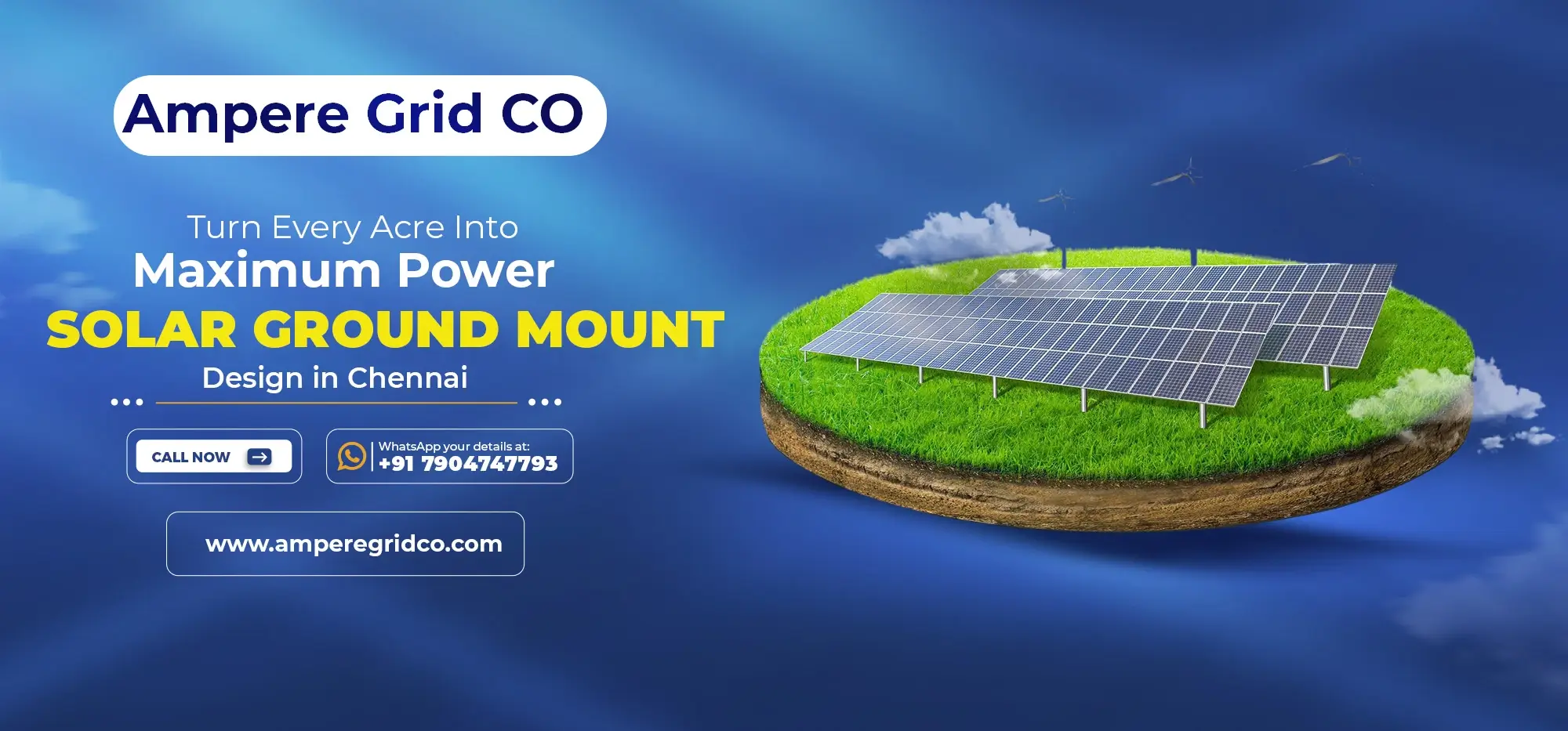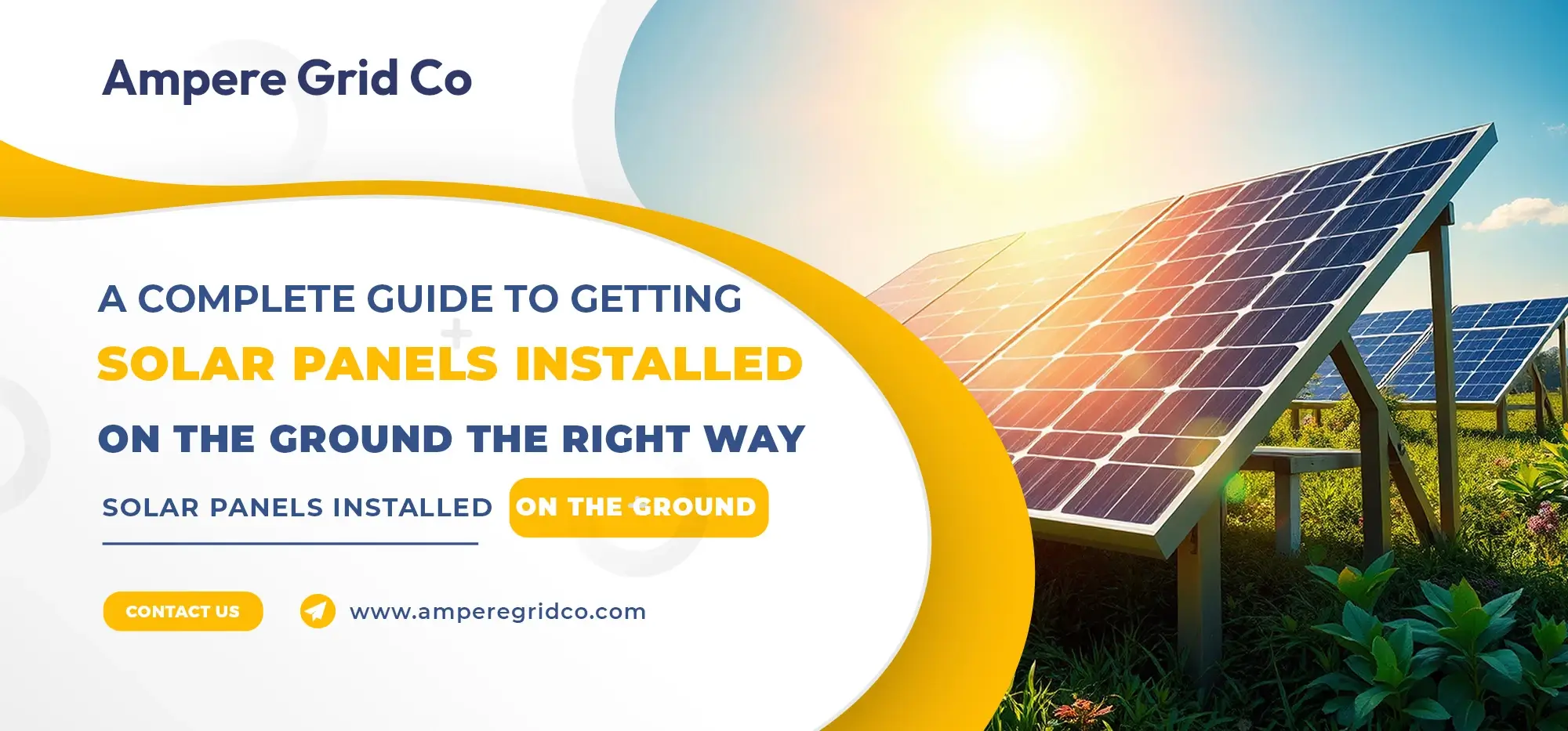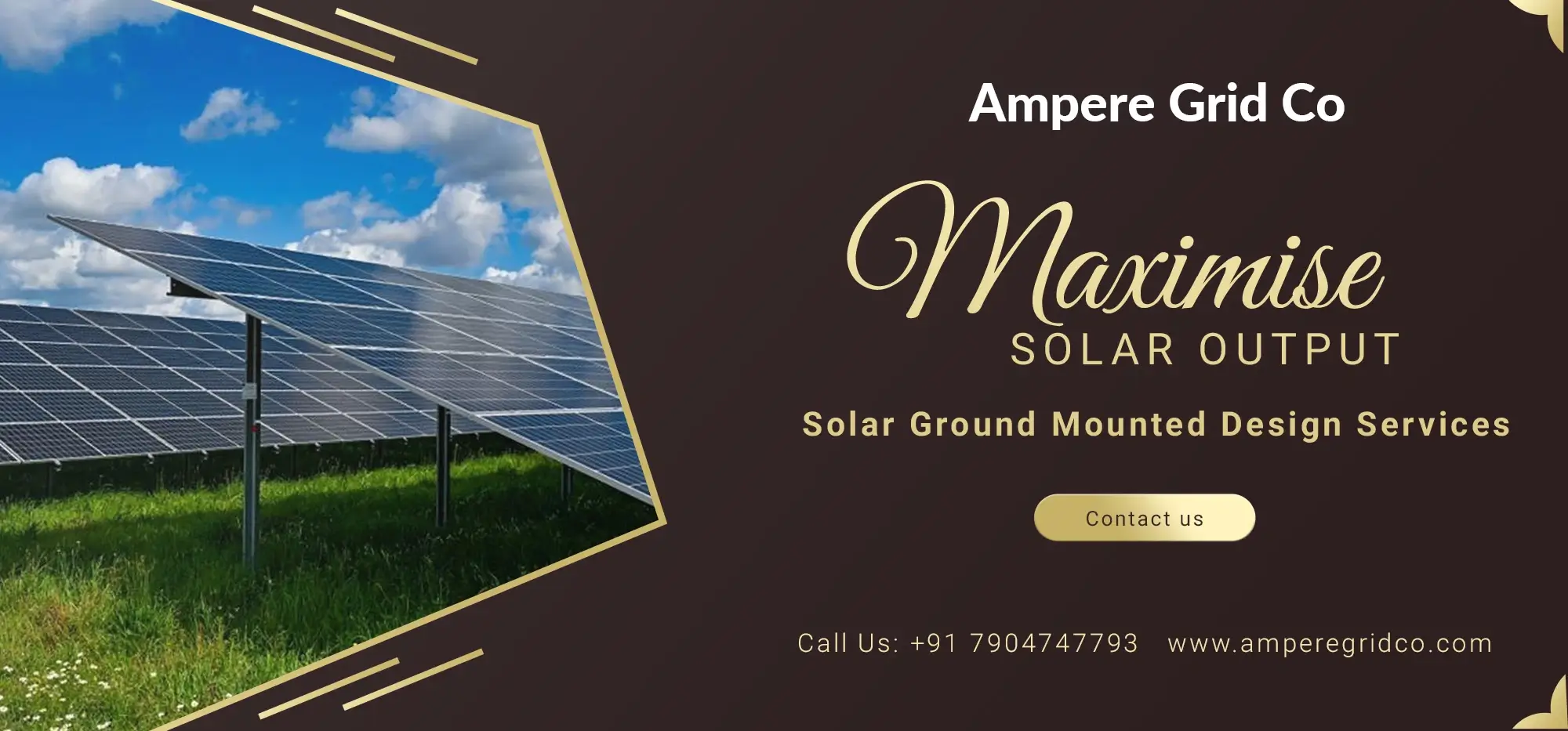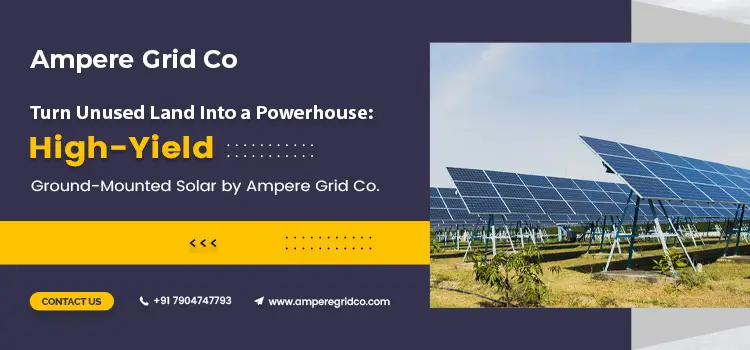
In 2026, the transition to renewable energy is no longer a choice but a corporate imperative. For large-scale enterprises and utility providers, installing solar panels on the ground has emerged as the most efficient way to achieve energy independence. Unlike restricted rooftop setups, ground-mounted systems offer the space and flexibility to deploy advanced technologies like bifacial modules and AI-driven solar trackers.
At Ampere Grid Co, we treat utility-scale solar as a high-precision infrastructure project. Below is our professional 2026 field guide to the engineering stages required to transform open land into a high-yield power plant.
The 7 Engineering Stages of Ground-Mounted Solar
1. Site Feasibility & Digital Topography
The process begins with a "Digital Twin" of the landscape. We use LiDAR-equipped drones to map the terrain, identifying shading risks and optimal drainage paths. Installing solar panels on the ground requires flat or gently sloped land to minimize expensive civil grading works.
2. Geotechnical Soil Analysis
Before a single post is driven, we conduct deep soil testing. This determines the "bearing capacity" of the earth. In 2026, we utilize varied foundation strategies: Helical piles for loose soil or Concrete ballasts for rocky terrain where drilling isn't feasible.
3. Layout Optimization & Shadow Mapping
Using AI-driven design software, our engineers calculate the perfect "Inter-row Spacing." This prevents panels from casting shadows on those behind them, especially during the low-angle sun of winter months. We optimize the tilt (usually between 15° to 35°) based on your specific latitude.
4. Structural Foundation & Racking
Once the layout is finalized, heavy-duty galvanized steel or aluminum racking is installed. For utility-scale projects, we often recommend Single-Axis Trackers that follow the sun from east to west, increasing energy harvest by up to 25% compared to fixed-tilt systems.
5. Bifacial Module Mounting
Modern 2026 standards prioritize Bifacial Solar Panels. These modules capture sunlight on both sides. When installing solar panels on the ground, we use reflective "albedo" materials like white gravel beneath the arrays to bounce light onto the rear of the panels, boosting total output by an additional 15%.
6. Electrical DC-to-AC Infrastructure
The energy collected as Direct Current (DC) must be converted to Alternating Current (AC). We install high-efficiency String Inverters or Central Inverters, depending on the scale. These are then connected to transformers that step up the voltage for long-distance transmission to the grid or your facility.
7. SCADA Integration & Commissioning
The final stage is the digital handshake. We integrate a SCADA (Supervisory Control and Data Acquisition) system. This allows for 24/7 remote monitoring, where AI algorithms detect "string-level" underperformance, ensuring your plant operates at peak efficiency from day one.
Why Choose Ampere Grid Co for Installing Solar Panels on the Ground?
Selecting an EPC (Engineering, Procurement, and Construction) partner is a 25-year decision. Ampere Grid Co is the preferred choice for forward-thinking organizations because:
- Customized Civil Engineering: We don't believe in "one size fits all." Our foundations are custom-engineered for your site's specific wind-load and soil profile, ensuring the structure survives extreme 2026 weather events.
- Tier-1 Technology Partnerships: We only use globally certified, high-efficiency N-Type TOPCon and HJT modules that offer lower degradation rates and longer warranties.
- End-to-End Liaisoning: Navigating DISCOM approvals and land-use permissions in India can be a nightmare. Our dedicated legal team handles all connectivity and environmental clearances for you.
- Bifacial Gain Optimization: We are experts in maximizing "Rear-Side" yield through specialized ground preparation and elevated mounting heights.
SEO Ranking FAQ: Installing Solar Panels on the Ground
1. How much land is required for installing solar panels on the ground at a 1 MW scale?
For a 1 MW utility-scale project, you typically need 4 to 5 acres of land. This allows for proper spacing between rows to avoid self-shading and provides access paths for maintenance vehicles and cleaning robots.
2. Are there specific soil requirements for installing solar panels on the ground?
Yes, the soil must have a minimum bearing capacity (usually 10 tons/m²) to support the weight of the steel structures and resist wind uplift. Ampere Grid Co conducts a full geotechnical report to decide if we should use driven piles, screw anchors, or concrete foundations.
3. Is ground-mounted solar more expensive than rooftop solar?
Initial capital expenditure for installing solar panels on the ground is generally higher due to civil works and longer cabling. However, the ROI is higher because ground systems allow for perfect orientation, better cooling/airflow, and the use of tracking technology which rooftop solar cannot accommodate.
4. What maintenance is required for ground-mounted solar arrays?
Maintenance is significantly easier than rooftop systems. It involves periodic panel cleaning (often automated via waterless robots in 2026), vegetation management to prevent shading, and annual infrared thermography to check for "hot spots" in the electrical connections.
5. Can the land under the solar panels be used for other purposes?
Absolutely. In 2026, Agrivoltaics is a massive trend. Ampere Grid Co can design "High-Clearance" mounts that allow for shade-loving crops or livestock grazing beneath the panels, turning your energy plant into a dual-revenue stream.
Conclusion: Transforming Space into Power
A utility-scale solar project is a landmark of sustainability and financial foresight. By focusing on precision engineering and the latest 2026 bifacial technologies, Ampere Grid Co ensures that your transition to the sun is seamless, scalable, and highly profitable.